
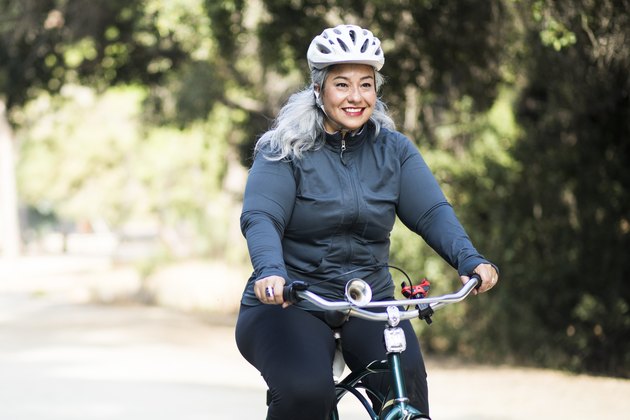
Training wheels save the day when you learn to ride a bike as a kid. But if you're learning in middle age — or getting reacquainted after a few years out of the saddle — you only have yourself to rely on to avoid spills.
这就是为什么它是至关重要的建立你的平衡和协调能力,如果你的目标是骑自行车锻炼, especially as you age and problems with balance become more common, according to the研究所Aging.
骑自行车是主要的下半身运动,但你的核心和上身不应该的手下败将。加强这些领域将有助于提高你的整体平衡,给你这些透过强硬地形需要自行车的敏捷性 - 在任何年龄。
Related Reading
“实力和核心工作,帮助你稳定在自行车上,增益体力,减轻疲劳为你的旅程,”罗德穆雷,一个莫里斯敦,新泽西州为基础的美国自行车教练,老板Body4Life Training和the author ofDynamic Flexibility: Train Your Body to Move, tells LIVESTRONG.com.
他还建议做上身运动减轻疲劳的颈部和肩部,加强中期和腰部,其中骑自行车的人通常比较微弱,以及练习来发展腿筋,像glute bridge,以帮助避免肌肉失衡在下半身。
Murray, who works with many cyclists over 50, shared some balance and strength exercises from his book below that can specifically help older riders looking to build a cycling routine.
Tip
Complete 2 to 3 rounds of these exercises a few times a week until they feel comfortable, and you'll be ready to ride.
移动1:夸张的游行
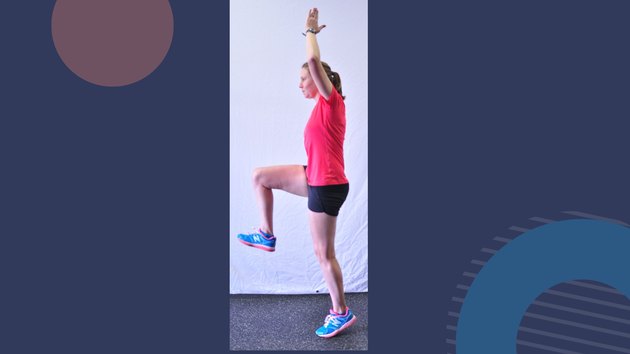
- 开始身体两侧,两脚一起,你的双臂站着。
- 抬起你的左臂开销。
- 与此同时,抬高右腿膝盖到臀部的高度,使膝部和大腿弯曲被尽可能地。
- Come up on your left toes and step forward with the right leg.
- 当你降低你的右脚在地上,把你的左臂回到你的身边。
- Repeat on the other side.
- 继续交替,直到完成20名代表。
移动2:梨状肌走
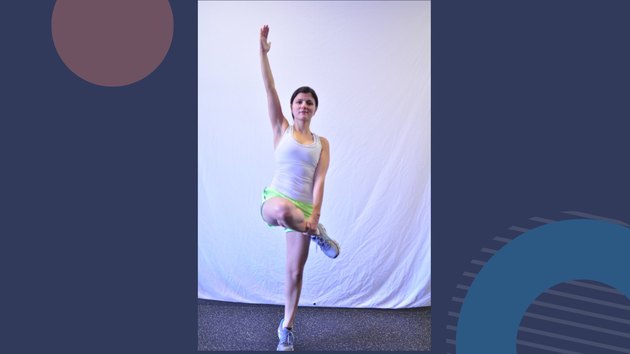
- Start standing with your feet together.
- Raise your right arm overhead.
- Lift your right leg to hip height and bend the knee as you grasp your shin just above your ankle with your left hand.
- 你拉向相反的臀部脚踝。继续轻轻支持和抬腿,你拿出你的左脚趾。
- Release your right leg from this position and step it forward.
- 在另一侧重复,继续交替双腿。
Move 3: Y
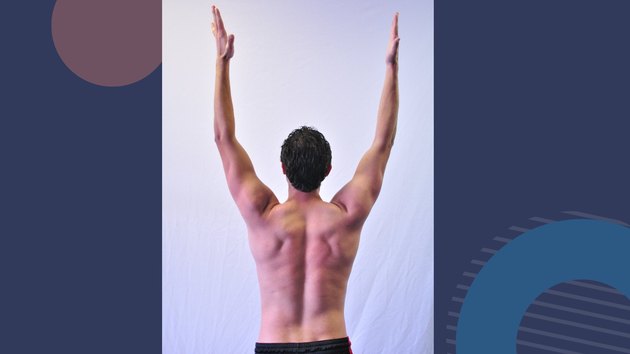
- 开始站在直立位置。
- Raise both arms straight up overhead as far as you comfortably can with your palms facing each other and fingers open to create an overhead Y.
- 轻轻拉你的肩胛骨向下,向后,再挤在一起并释放。不要用你的武器,迫使你的肩膀向后。侧重于实现在肩胛骨受控反向运动。
移动4:T
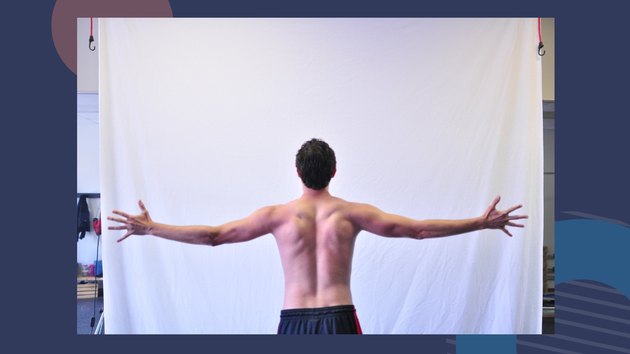
- After you complete the Y exercise, go directly to the T exercise. Bring your arms up and out to the sides at shoulder height with your palms facing forward. Remember to keep the fingers open.
- 使用相同的运动为Y运动,拉动肩胛骨向后,挤下来,回来。用你的肩胛骨执行与控制的运动,不要强迫武器。
移动5:W
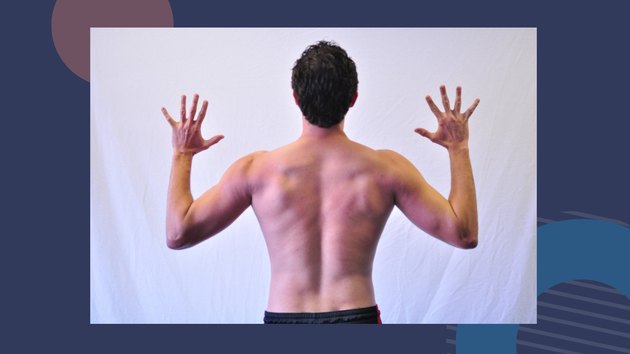
- After you complete the T exercise, transition to the W exercise. Bend and draw your elbows into the sides of your body toward your hips. Your arms should resemble the letter W. Keep your fingers open and palms facing forward.
- 就像在Y和T演习,向后画出你的肩胛骨在受控的运动。
Move 6: Shoulder Protraction and Retraction
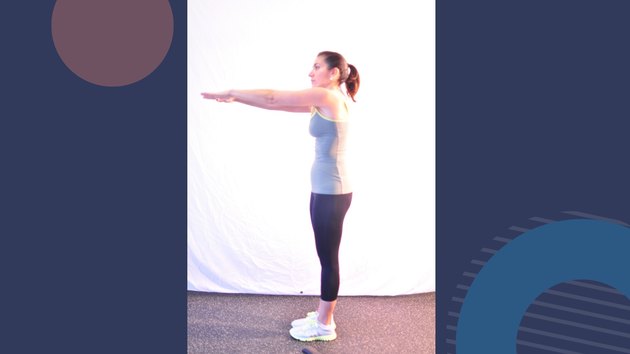
- Start standing and keep your chin, neck and head in a neutral position throughout the movement. Avoid shrugging your shoulders.
- Raise your arms to shoulder height with your palms facing either the floor or each other. Keep your arms and fingers level with your shoulders. Your shoulders should be relaxed and aligned.
- Using only your shoulders, gently push your arms forward as far as you comfortably can, keeping them level with your shoulders. Round your shoulders forward while the rest of your back maintains its neutral position.
- 一旦你圆润的肩膀尽可能靠前,开始拉他们回到起始位置收回你的肩胛骨。继续向后拉动你的手臂,直到肩部尽可能舒适的可能拉回。
Tip
Murray says this exercise employs the forward (protraction) and backward (retraction) movements of your shoulder blades. The only movement is the arms being pushed forward and pulled backward by the shoulder blades.
移动7:前臂木板
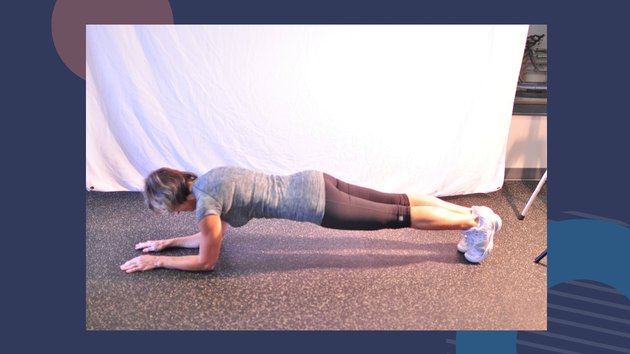
- Come down onto your hands and knees on the floor or a mat. Bend your elbows, and rest your weight on your forearms, stacking your shoulders over your elbows.
- 扩展你的腿,创建从头顶到脚跟的直线。
- To keep your lower back from dropping or sagging, engage your abs, glutes and quads as you hold this plank position. Keep your gaze toward the floor and your neck straight.
- Hold this plank for five to 10 seconds for five to 10 rounds. Build up to holding a one-minute plank.
移动8:臀肌桥
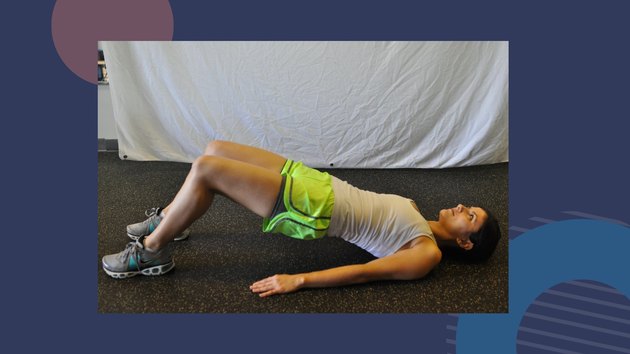
- Start by lying on your back on the floor or a mat with your knees bent and feet flat on the floor.
- 挤压你的臀部,抬起你的臀部离开地面,只要你感到舒适即可。
- Aim to achieve a diagonal line from your shoulders to your knees. Be careful not to arch your lower back. Your knees should be bent to about 90 degrees or as much as comfortably possible.