
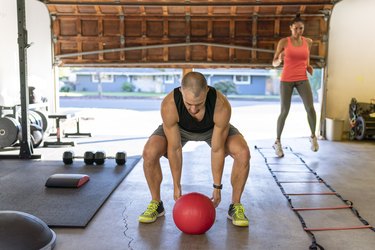
Think of高强度间隔训练(HIIT) like baking: You need a precise amount of time in the oven as well as a cooling-off period. In workout terms, that means balancing intervals of work with rest.
“ HIIT锻炼的主要目标是通过特定锻炼以最大的努力进行,然后是predetermined rest break”Movement Vault。
But if your work intervals are too long, you're not recovered enough for the next interval. And too much rest means you lose momentum and燃烧后的好处。以下是如何在适合您的健身水平和目标的工作比例中找到最佳位置的方法。
找到理想的工作比率
根据2016年10月的评论British Journal of Sports Medicine。
What hasn't been studied as thoroughly, however, is the ideal interval time. A 2019 study from the生理社会比较了两组的结果:那些以60秒的休息(60/60)进行了60秒运动的人,以及那些进行30秒的运动和120秒的休息(30/120)。参与者每周三次进行HIIT锻炼六周。
研究人员发现,60/60组增加了有氧能力,而30/120组没有改善。120秒的休息时间太长了,无法有效,因为他们的心率没有熬夜。
不过,尚未将所有HIIT锻炼重写为60/60格式。该研究仅比较了两个间隔时间,还有其他定时策略也有效。但这确实提出了一个重要的观点:不要让休息时间太长。
Consider Your Fitness Level and Workout Time
在确定理想间隔时间时,您应该查看几个因素。威克汉姆说:“其余工作比率的一个很大的因素是您的总锻炼时间会多长时间。”他说,在60/60的比例中,进行30分钟的锻炼将很棒,但是较短的锻炼可能会较短,休息时间较短,并且工作时间更长。
CSCS的创始人Mike Donavanik说,您还应该考虑当前的健身水平和正在进行的锻炼类型。Sweat Factor。
他说:“如果您是锻炼的新手,通常需要更长的休息时间间隔,因为您试图评估身体并了解自己的努力。”“当您开始掌握身体及其可以完成的工作时,您可以在'工作间隔'中开始更加努力地推动它,并且/或/或您可以在'休息间隔'中开始降低时间。”
对于初学者来说,他说要从1:2的工作/休息比开始。“这意味着您要努力去20秒,然后休息40秒。”
As you progress, go for a 1:1 work/rest ratio. For example, 20 seconds of exercise and a 20-second rest — or the 60/60 ratio mentioned above. "Then once you're getting the hang of things, you go for a 2:1 work/ rest ratio. So you go hard for 20-seconds, then only take 10-seconds of rest."
TheNational Academy of Sports Medicine(NASM)还建议使用这些间隔时间,包括10秒的休息时间(这是Tabata风格的锻炼)和1:1的比率(30秒的工作,有30秒的休息时间)。
提示
Don’t do HIIT every day, as your body needs time to rest and recover between sessions, according to the美国锻炼理事会(高手)。计划每周不超过两到三次进行HIIT锻炼。
将HIIT间隔构成您的健身目标
HIIT workouts are most suited to losing weight or improving endurance and overall conditioning but not recommended if you're trying to gain muscle mass or improve explosive power, according to Donavanik. If that's the case, you're better off sticking to a举重例程or sport-specific with longer rest intervals.
“基于力量的工作将需要更长的休息时间,尤其是在力量增加的情况下,”thisiswhyimfit.com。"Sixty seconds often isn't enough time to adequately rest from explosive or strength-based exercise. You wouldn't be able to perform well on a 100-meter sprint with only 60 seconds of rest between rounds."
但是,对于减肥和改善耐力或调节,Donavanik说1:1的比例是理想的,您可以晋升为2:1的比率。例如,从30秒的休息开始工作30秒,然后在20秒的休息中增加到40秒的工作。
"[This ratio] is going to be the most efficient in regards to spiking your heart rate, keeping it spiked and creating an oxygen deficit during exercise," he says. "That essentially means that your body needs more oxygen after your workout than it did before — meaning you'll be burning more calories after your workout (at rest) than you were prior to your workout."
提示
During the “max effort” intervals, you should be working out hard enough and long enough that you're breathless and unable to talk, according to the NASM.
And the rest periods need to be long enough that your breathing is back under control before you jump back into the work interval. You can't rest too long, however, as you need yourheart rate to stay up。
您的HIIT间隔指南
While there's no one "ideal interval time" that works for everyone and every workout, the guide below based on the input of our experts will provide some work-to-rest ratios that can help when planning your workouts:
- 初学者间隔:1:2比率(例如:20秒的工作和40秒的休息)
- Intermediate interval or longer workout (30 minutes or more):1:1比率(例如:30秒的工作和30秒休息或60秒的休息时间)
- Advanced interval or shorter workout (less than 30 minutes):2:1 ratio (ex: 40 seconds of work and 20 seconds of rest)
And remember to keep your rest periods on the shorter side. Donavanik says 30 to 60 seconds of rest is ideal for weight loss or general conditioning, but he doesn't recommend going above 90 seconds. Also, take into account the type of activity you are doing.
他说:“这实际上取决于您要您的身体要做什么以及在给定的活动或锻炼过程中努力推动身体。”例如,跳跃弓步或高膝盖需要比下蹲或仰卧起坐更长的休息时间。“通常,要求活动越困难或越多,需要更多的休息。”
In general, though, listen to your body and adjust your intervals accordingly. Once you hit your sweet spot, you'll feel it. You'll be working hard with just enough recovery to tackle the next interval.
- National Academy of Sports Medicine: "HIIT Workouts: Programming, Exercises, and Benefits"
- 美国锻炼理事会: "The Perfect HIIT Workout for 2020"
- 生理社会: "Longer Home-Based HIIT Intervals Elicit a Greater Improvement in Aerobic Capacity – a 6-Week Intervention Study"
- British Journal of Sports Medicine: "Effects of High-Intensity Interval Training on Cardiometabolic Health: A Systematic Review and Meta-Analysis of Intervention Studies"