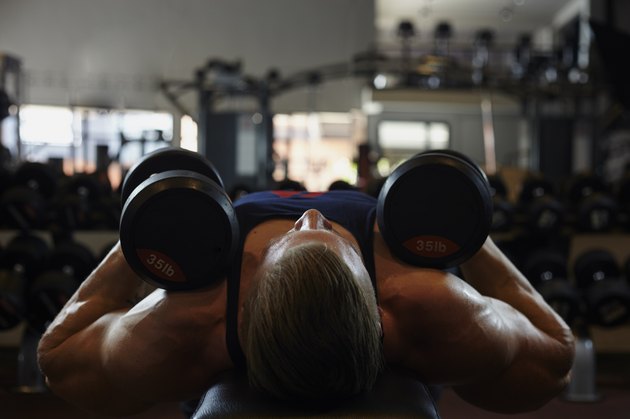
Creatine is an amino acid that forms creatine phosphate in the body. Creatine intake generally comes from eating meat and fish, although it can be synthesized in the body from other amino acids. Creatine in the form of creatine monohydrate, creatine ethyl ester and/or tri-creatine citrate, has become a popular nutritional supplement because it has been shown to improve performance of high intensity exercise.
Bio-energetics 101
All energy in the body comes from the dephosphorylation of adenosine tri-phosphate (ATP). When a phosphate is removed from ATP, adenosine diphosphated (ADP) remains and energy is released. That energy allows the body to do work. Unfortunately we have a finite pool of ATP, and we cannot store extra amounts of it. Therefore, our bodies try to replenish ATP quickly as we break it down. The more ATP we can replenish, the more energy we can create, and the more work we can do.
How Creatine Helps Create ATP
We can replenish ATP in several different ways, all of which have unique characteristics regarding at what speed and for how long ATP is created. The first ATP-replenishment system to act when energy is needed is the creatine phosphate (CrP) system. In this system CrP combines with the ADP that remains from ATP breakdown, donating its phosphate to create ATP. This system creates ATP at a faster rate than any other energy system. However, as with ATP, the body has a small and finite store of CrP. Ingesting supplemental creatine can boost the creatine phosphate system, providing for enhanced replenishing of ATP during short duration, high intensity activities like sprinting or weight training.
肌酸和体重增加
Certainly creatine can cause weight gain due to muscle hypertrophy. If one is able to weight-train at a higher intensity and/or volume due to the ergogenic influence of creatine, enhanced muscle strength and size logically follow. The question, however, is about non-muscle weight gain, the possibility that creatine can make you gain weight in other ways. The short answer is yes. An early study of creatine supplementation by Ziegenfuss, et al., first made the case that creatine ingestion causes fluid retention. They postulated that as creatine is taken into the cells, it is accompanied by water. This results in a higher amount of intracellular water and total body water, which typically shows up on the scale as 1 to 2 kilograms of weight gain.
Implications of Creatine-Induced Water Weight Gain
Lopez等人,最近公布了几种研究的荟萃分析,其中包括在服用补充肌酸的群体时可能发生的体重变化。它们在十九项研究中发现,综述了由于肌酸补充剂而导致的体重增加,并且通常这些增加是细胞内水收益的结果。显然,这些收益可能对一个试图减肥的战斗机或骑师造成损害。但是,否则它们看起来无害和可逆。Lopez的纸张明确表示,这种额外的细胞内水不会阻碍热调节,或以其他方式使肌酸用户更容易受到痉挛,散热或其他热疾病的影响。
Bottom Line
通过增加培训的肌肉尺寸增加肌肉尺寸,通过增加肌细胞中储存的水量,通过增加肌肉细胞的水量来增加重量,使得重量增强。然而,随着肌酸补充剂的终止,总体水很快恢复正常,而肌肉收益可能会更持久。