
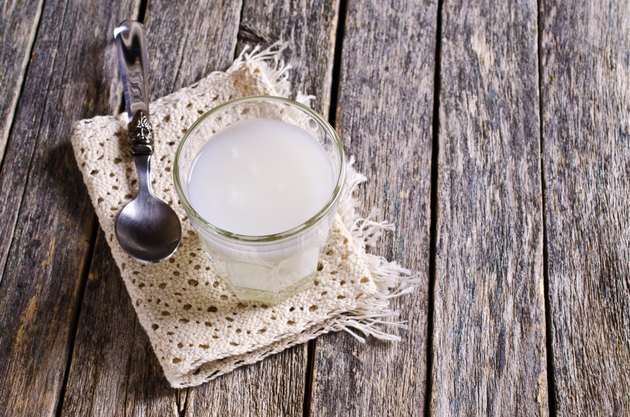
低脂乳制品是良好的蛋白质来源,特别是如果你限制了你的肉类摄入量。然而,酸奶和牛奶不是你唯一的选择。低脂肪Kefir,一种发酵的乳制品,提供蛋白质以及其他营养益处,使其成为您的饮食的健康补充。
About Kefir
Kefir results when milk is combined with bacteria and allowed to ferment. Yogurt is created using the same process, but more and different types of bacteria and yeast are used to create kefir. The bacteria in kefir, known as probiotics, may improve digestion and prevent the overgrowth of harmful bacteria in the gut. Kefir has a texture like pourable yogurt, a tangy taste and a fizzy "mouthfeel." Kefir comes in a plain, unsweetened version or in a number of flavors including fruit, coffee and chocolate. Kefir, as a dairy product, is also a source of calcium and vitamin D.
Protein
One cup of kefir contains 11 to 14 grams of complete protein, depending on the flavor. A complete protein provides all the essential amino acids your body cannot create on its own. Other complete proteins include eggs, beef, chicken and fish. Because kefir comes from milk, the protein is composed of a combination of whey and casein. Consuming dairy sources of protein, such as kefir, may help you accelerate weight loss and retain lean muscle mass. A study in the "Journal of Nutrition," published in July 2011, found that obese women who consumed a high-protein and high-dairy diet experienced more favorable amounts of fat loss and lean muscle gain than those consuming less protein and dairy.
Uses
You can drink kefir alone or pour it over hot or cold cereal. You can also use kefir instead of milk or yogurt in smoothies. Have kefir as a snack with fresh fruit to ward off the afternoon munchies. Eating a diet higher in protein may help you feel more satiated, notes the Harvard School of Public Health. Drinking a cup of kefir after a workout provides you with quick-digesting whey protein that can help your muscles repair and recover. The casein protein in kefir digests more slowly to help your muscles continue to synthesize hours later. A review in "The Proceedings of the Nutrition Society" published in February 2011 concluded that consuming dairy protein shortly after a bout of exercise promotes muscle protein synthesis and, consequently, muscle growth.
Sugar
While plain kefir contains about 8 grams of naturally occurring sugar per cup, flavored kefirs may contain up to 21 grams per cup. The additional sugar is from added sweeteners such as cane sugar or honey. The American Heart Association recommends you limit your daily intake of added sugars to 6 teaspoons per day for women and 9 teaspoons for men. The 8 to 9 grams of added sugar in flavored kefir is equal to about 2 teaspoons.
- "Journal of Nutrition"; Increased Consumption of Dairy Foods and Protein during Diet- and Exercise-Induced Weight Loss Promotes Fat Mass Loss...; Andrea R. Josse, et al.; July 2011
- LIVESTRONG.COM的rayapp餐盘”:低脂纯酸乳酒(Lifeway Foods)
- "Los Angeles Times"; Kefir's Good But May Not Merit a Halo; Elena Conis; September 2008
- Cornell University: Milk Protein
- "The Proceedings of the Nutrition Society"; The Science of Muscle Hypertrophy: Making Dietary Protein Count; S.M. Phillips; February 2011
- LIVESTRONG.COM MyPlate: LowFat Blueberry Kefir (Lifeway Foods)
- "Circulation"; Dietary Sugars Intake and Cardiovascular Health: A Scientific Statement From the American Heart Association; Rachel K. Johnson, et al.; August 2009