
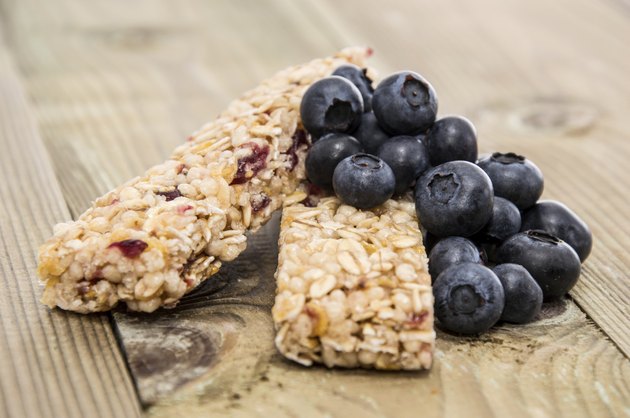
Protein bars are convenient, tasty and can provide quick nutrients for recovery after a workout. There are advantages to occasionally reaching for a bar to help you refuel, but before you do, it's worth learning more about what different bars have to offer and how they stack up against protein-rich whole foods.
A Bar's Benefits
Not everyone who works out is concerned with weight maintenance, but if you are, a post-exercise protein bar won't do any harm and may even help. Bars that are designed to offer hearty amounts of protein can help you curb your total calorie intake, feel fuller and successfully lose weight. Protein is more satiating than either carbohydrates or fat, and occasionally eating a protein bar may also lower your blood sugar levels, especially if the bar is also high in fiber. As part of a weight-loss plan, a protein bar can also make a reasonable meal replacement and may save you hundreds of calories per day.
More Muscle
There's also evidence that protein bars can promote muscle gain when you eat them in conjunction with weight training. In one study published in "Nutrition Journal" in 2004, subjects who ate protein bars daily and participated in resistance training over a nine-week period gained lean muscle mass, but subjects who did training without protein bars did not. The benefits applied whether the subjects ate soy bars or whey bars, which points to the conclusion that the specific source of protein in your bar isn't all that important. According to the National Strength and Conditioning Association, having protein post-workout encourages muscle gain, reduces soreness and accelerates training recovery.
Your Ideal Bar
Protein bars vary widely in ingredients and quality of nutrition, and it's worth taking the time to find one that's healthiest for your needs. Personal trainer and metabolic disorders specialist Lisa Lynn recommends finding a bar with at least 15 grams of protein as well as several grams of complex carbohydrates and fiber. Ideally, the bar should have as little sugar as possible and no trans fats. Lynn recommends a bar that's about 150 calories if you're using it as a snack and a bar that's about 300 calories if it's serving as a meal replacement.
告诫
蛋白棒是在糖和不健康脂肪可以做的比好你的健身水平更多的伤害,因为吃了很多这些物质的高点已经证明,以提高你的高血脂,心脏疾病,体重增加和其他健康问题的风险。不与天然原料制成的蛋白棒还提供了一个缺点,因为它们不具有营养和保护物质整个食品做的高品质。在添加条到你的正常饮食,从你的医生或注册营养师反超。
- American Journal of Clinical Nutrition: Protein, Weight Management and Satiety
- Asia Pacific Journal of Clinical Nutrition: High Protein and High Fibre Snack Bars Reduce Food Intake and Improve Short Term Glucose and Insulin Profiles
- Nutrition Journal: Soy Vs Whey Protein Bars
- National Strength and Conditioning Association: Whey Protein Vs Casein Protein and Optimal Recovery
- DoctorOz.com: Do You Know What's In Your Protein Bar?
- U.S. Department of Health & Human Services: Fats, Added Sugars and Salt
- Bastyr Center for Natural Health: Protein Bars - Better Nutrition Through Science?